Cars 1960-1961
Except otherwise stated, all results below include the premium.
See also : Cars 1960s Ferrari California Spider Aston Martin Cars in movies
See also : Cars 1960s Ferrari California Spider Aston Martin Cars in movies
1960 Ferrari 250 GT LWB California Spider
2012 SOLD for $ 11.3M by Gooding
In August 2010, Gooding sold for $ 7.3M a Ferrari 250 GT LWB California Spider Competizione of 1959.
A car of the same model was sold for $ 11.3M from a lower estimate of $ 7M by Gooding on August 18, 2012. Made in 1960, it had been used as a show car by George Reed, Ferrari's agent in Illinois and Wisconsin. It is in excellent condition but with no racing history.
A car of the same model was sold for $ 11.3M from a lower estimate of $ 7M by Gooding on August 18, 2012. Made in 1960, it had been used as a show car by George Reed, Ferrari's agent in Illinois and Wisconsin. It is in excellent condition but with no racing history.
Ferrari 250 GT SWB California Spider
Intro
The second Ferrari 250 GT SWB California Spider was built in August 1960, three months after the prototype. The passo corto wheelbase is reduced of 20 cm down to 240 cm from the earlier variety which from then becomes known as passo lungo LWB. Also applied o the 250 GT berlinetta, the change provides a significant improvement for stability and therefore for the ratio of speed and power of the model.
This transition California Spider with a steel body is one of only two fitted with the Tipo 128F engine of the 250 GTE 2+2 Series 2 and one of only three without side vents. It does not have the covered headlamps.
It was sold after auction for $ 8.25M by RM Sotheby's on August 19, 2023, lot 354. Please watch the video shared by the auction house.
It was refinished before the sale to its livery of the 1962 Targa Florio which had been the only racing event in its early period. Its engine, gearbox and rear axle are in matching numbers. Its original soft top and hard top accompany in separate cases.
This transition California Spider with a steel body is one of only two fitted with the Tipo 128F engine of the 250 GTE 2+2 Series 2 and one of only three without side vents. It does not have the covered headlamps.
It was sold after auction for $ 8.25M by RM Sotheby's on August 19, 2023, lot 354. Please watch the video shared by the auction house.
It was refinished before the sale to its livery of the 1962 Targa Florio which had been the only racing event in its early period. Its engine, gearbox and rear axle are in matching numbers. Its original soft top and hard top accompany in separate cases.
1
1961 ex Baillon
2015 SOLD for € 16.3M by Artcurial
I once believed that the top prices rewarded the cars in perfect condition. The ex Delon-Baillon California Spider cancels such a view. Hidden in a barn since 1975 after the bankruptcy of its owner, it had been retrieved under stacks of magazines. Ferraris are vehicles of an exceptional robustness : it had valiantly withstood four decades of neglect in the wet French countryside.
More important for its position on the market : it has never been disassembled. Despite its pitiful look, it has everything to become through a careful restoration the best car in its glorious class. Its short belonging in 1963 to a movie star, widely reported by the media before and after the sale, probably had no impact on its price.
Here is its story :
The Ferrari 250 GT California Spider with chassis 2935GT was released from factory in 1961 and exhibited at the October 1961 Paris Motor Show. It was very elegant with the new short wheel base SWB chassis, now systematic for this model, and the rare option of covered headlights. The actor Gérard Blain bought it one week after the Salon closed.
Its second owner is Alain Delon, who uses it in Monaco and Los Angeles and is pictured with it with lovely passengers : Jane Fonda, Shirley MacLaine, his wife Nathalie. Delon sold it in 1965 with 37,000 km from new.
After several intermediaries, the car is acquired in 1971 by Roger Baillon and his son Jacques, contractors in truck bodywork and transport. In 1950, more than ten years before the Schlumpf brothers, Roger had started to recover and restore automotive masterpieces, with a view to create a museum.
Baillon puts the Ferrari in the barn. He probably does not use it, although he paid for its tax disc until 1975. The Baillon collection is secret, in large part because of the bankruptcy of the company. Some elements of the collection were seized and sold at auction near Niort in 1979 and 1985. The others remained hidden.
Jacques Baillon died in 2013. The heirs opened the hangar for an expertise by Artcurial on September 30, 2014, thus creating the most sensational "barn find" of modern times.
The storage had not been homogeneous. Two cars had been preserved from mist during these four decades, the Ferrari and a Maserati A6G 2000 Gran Sport berlinetta. Under its layer of dust, the Ferrari is in matching numbers, with intact bodywork except for the hood distorted under the magazines, and with its original upholstery and documentation.
Artcurial managed the auction in Paris on February 6, 2015, making a hype with the former belonging of the Ferrari to Delon. Connoisseurs are not mistaken : this car is an extremely rare untouched California Spider. Estimated at a daring 9.5M, it was sold for € 16.3M, lot 59. The Maserati fetched € 1.96M. In a near collapse condition, an exceptional Talbot Lago T26 Grand Sport by Saoutchik was sold for € 1.7M.
More important for its position on the market : it has never been disassembled. Despite its pitiful look, it has everything to become through a careful restoration the best car in its glorious class. Its short belonging in 1963 to a movie star, widely reported by the media before and after the sale, probably had no impact on its price.
Here is its story :
The Ferrari 250 GT California Spider with chassis 2935GT was released from factory in 1961 and exhibited at the October 1961 Paris Motor Show. It was very elegant with the new short wheel base SWB chassis, now systematic for this model, and the rare option of covered headlights. The actor Gérard Blain bought it one week after the Salon closed.
Its second owner is Alain Delon, who uses it in Monaco and Los Angeles and is pictured with it with lovely passengers : Jane Fonda, Shirley MacLaine, his wife Nathalie. Delon sold it in 1965 with 37,000 km from new.
After several intermediaries, the car is acquired in 1971 by Roger Baillon and his son Jacques, contractors in truck bodywork and transport. In 1950, more than ten years before the Schlumpf brothers, Roger had started to recover and restore automotive masterpieces, with a view to create a museum.
Baillon puts the Ferrari in the barn. He probably does not use it, although he paid for its tax disc until 1975. The Baillon collection is secret, in large part because of the bankruptcy of the company. Some elements of the collection were seized and sold at auction near Niort in 1979 and 1985. The others remained hidden.
Jacques Baillon died in 2013. The heirs opened the hangar for an expertise by Artcurial on September 30, 2014, thus creating the most sensational "barn find" of modern times.
The storage had not been homogeneous. Two cars had been preserved from mist during these four decades, the Ferrari and a Maserati A6G 2000 Gran Sport berlinetta. Under its layer of dust, the Ferrari is in matching numbers, with intact bodywork except for the hood distorted under the magazines, and with its original upholstery and documentation.
Artcurial managed the auction in Paris on February 6, 2015, making a hype with the former belonging of the Ferrari to Delon. Connoisseurs are not mistaken : this car is an extremely rare untouched California Spider. Estimated at a daring 9.5M, it was sold for € 16.3M, lot 59. The Maserati fetched € 1.96M. In a near collapse condition, an exceptional Talbot Lago T26 Grand Sport by Saoutchik was sold for € 1.7M.
2
1961
2016 SOLD for $ 17.2M by Gooding
On March 11, 2016, Gooding sold for $ 17.2M a California Spider, lot 069. This specific example has many qualities that make it one of the most desirable Ferrari cars.
This car built in 1961 has the two outstanding aesthetic achievements by Scaglietti : the bodywork on the shorter frame and the covered headlights. Its color is the best symbol of the brand: it is painted in red and the leathers are black.
It had only three owners from new who carefully maintained and serviced it without modification and it so remains one of the most original from that model. It had probably never left Italy.
This California Spider is the dream car in the film Ieri, Oggi, Domani released in 1963. The movie is composed of three episodes of the Italian life unconnected in location or time, whose only common point is the leading couple, Sophia Loren and Marcello Mastroianni.
The central story, Oggi, was inspired from a short novel by Moravia whose title Troppo Ricca demonstrates the intention of social criticism. The woman drives with her lover the Rolls-Rolls of her husband and suddenly considers that she must make a choice between man and car. Relationships become nervous and Sophia crashes the Rolls.
The woman leaves on the road both car and lover and makes hitchhiking. They are near to Milan and the car that boards Sophia is our Ferrari, lent by its owner of that time to the film producer. Italy did not need to rely on concept cars to show on screen the ideal car : they had the 250 GT SWB California Spider.
This car built in 1961 has the two outstanding aesthetic achievements by Scaglietti : the bodywork on the shorter frame and the covered headlights. Its color is the best symbol of the brand: it is painted in red and the leathers are black.
It had only three owners from new who carefully maintained and serviced it without modification and it so remains one of the most original from that model. It had probably never left Italy.
This California Spider is the dream car in the film Ieri, Oggi, Domani released in 1963. The movie is composed of three episodes of the Italian life unconnected in location or time, whose only common point is the leading couple, Sophia Loren and Marcello Mastroianni.
The central story, Oggi, was inspired from a short novel by Moravia whose title Troppo Ricca demonstrates the intention of social criticism. The woman drives with her lover the Rolls-Rolls of her husband and suddenly considers that she must make a choice between man and car. Relationships become nervous and Sophia crashes the Rolls.
The woman leaves on the road both car and lover and makes hitchhiking. They are near to Milan and the car that boards Sophia is our Ferrari, lent by its owner of that time to the film producer. Italy did not need to rely on concept cars to show on screen the ideal car : they had the 250 GT SWB California Spider.
3
1961
2015 SOLD for $ 16.8M by Gooding
2024 for sale on August 16 by Gooding
A highly original 1961 California Spider with SWB chassis, covered headlights and optional hardtop cumulates the best desirability for the model.
The 33rd SWB spider had been Ferrari Classiche certified in 2006, assessing that it retains its original chassis, body, engine, and other important mechanical components.
It had been loaned in 2014 to the brand as a parade car for the Belgian Grand Prix.
It was sold for $ 16.8M by Gooding on August 16, 2015, lot 129. Still unrestored, it will be sold on August 16, 2024 by the same auction house, lot 59. It is featured at the top position in the pre sale press release. Please watch the video shared in 2024 by the auction house. This car has never been entered in a major concours d'élégance.
The 33rd SWB spider had been Ferrari Classiche certified in 2006, assessing that it retains its original chassis, body, engine, and other important mechanical components.
It had been loaned in 2014 to the brand as a parade car for the Belgian Grand Prix.
It was sold for $ 16.8M by Gooding on August 16, 2015, lot 129. Still unrestored, it will be sold on August 16, 2024 by the same auction house, lot 59. It is featured at the top position in the pre sale press release. Please watch the video shared in 2024 by the auction house. This car has never been entered in a major concours d'élégance.
4
1961
2014 SOLD for $ 15.2M by Gooding
On May 18, 2008; RM Auctions in association with Sotheby's sold for € 7M the 1961 SWB that had belonged to the actor James Coburn from 1964 until his death in 2002.
Another 1961 SWB was sold for $ 15.2M by Gooding on August 16, 2014, lot 18.
This car was exhibited at the Salon de l'Automobile at the Grand Palais in October 1961. It briefly belonged to actress Barbara Hershey. Owned by a suite of careful collectors since 1974, it has been from 1993 one of the most regular stars of the Concours d'Elegance.
This spider has a rare option, the removable hardtop, which allows if needed to use it as a coupe.
Another 1961 SWB was sold for $ 15.2M by Gooding on August 16, 2014, lot 18.
This car was exhibited at the Salon de l'Automobile at the Grand Palais in October 1961. It briefly belonged to actress Barbara Hershey. Owned by a suite of careful collectors since 1974, it has been from 1993 one of the most regular stars of the Concours d'Elegance.
This spider has a rare option, the removable hardtop, which allows if needed to use it as a coupe.
1960 Ferrari 250 GT Berlinetta
Intro
The 250 GT berlinetta matches the usual strategy of Ferrari to offer to their customers increasingly powerful and stable sports cars in closed bodies. For this reason, this model is much less rare than the California Spider built on the same subsequent chassis, LWB (long wheel base or passo lungo with 260 cm wheelbase) and later SWB (short wheel base or passo corto with 240 cm wheelbase). The LWB denomination appeared after the transition.
Developed in 1959 under the care of Bizzarrini, Chiti and Forghieri, the transition to SWB is a significant improvement for stability and therefore for the ratio of speed and power of the model. The SWB berlinetta was the first Ferrari production road car to be fitted with disc brakes as standard equipment.
The LWB berlinetta, of which 84 units had been built, was nicknamed TdF after three consecutive victories in the Tour de France, 1957 to 1959.
Despite its effectiveness, the SWB berlinetta did not receive a nickname. It won the same competitions as its predecessor including three consecutive Tours de France, 1960-1962, and pleased its owners by its driving comfort and its compact look which is a masterpiece of balance by Pinin Farina.
Much effort has also been made for its industrialization : 165 units of the 250 GT SWB were produced between 1960 and 1963, including 45 aluminum-bodied Competizione examples built in 1960. The coachwork was made by Scaglietti.
Developed in 1959 under the care of Bizzarrini, Chiti and Forghieri, the transition to SWB is a significant improvement for stability and therefore for the ratio of speed and power of the model. The SWB berlinetta was the first Ferrari production road car to be fitted with disc brakes as standard equipment.
The LWB berlinetta, of which 84 units had been built, was nicknamed TdF after three consecutive victories in the Tour de France, 1957 to 1959.
Despite its effectiveness, the SWB berlinetta did not receive a nickname. It won the same competitions as its predecessor including three consecutive Tours de France, 1960-1962, and pleased its owners by its driving comfort and its compact look which is a masterpiece of balance by Pinin Farina.
Much effort has also been made for its industrialization : 165 units of the 250 GT SWB were produced between 1960 and 1963, including 45 aluminum-bodied Competizione examples built in 1960. The coachwork was made by Scaglietti.
1
Competizione 1773 GT restored by Motion Products
2024 SOLD for € 10.2M by RM Sotheby's
RM Sotheby's dispersed on August 13, 2015 a single owner collection of sports cars and supercars. identified as The Pinnacle Portfolio. The "pinnacle" in this group was a Ferrari 250 GT SWB Berlinetta from 1960, lot 125.
This early SWB Competizione alloy example was completed in March 1960, fitted from new with the high end powerful engine Tipo 168 B. Released intentionally for the use of Chinetti's NART team in the 1960 edition of the 12 Hours of Sebring which was the SWB’s competition debut, it finished 7th overall and 5th in the 3 litre class.
Despite a very good history in competition, it never had a major incident or a clumsy restoration and could be a great candidate to be restored according to the latest and best available know how.
A market survey conducted by the Pinnacle Portfolio owner led in 2014 to entrust this painstaking work to Wayne Obry and his Motion Products Inc company in Neenah WI. Obry shares his secret on the website of his company : with an experience of more than thirty years on Ferraris, he turns rust into millions.
The customer was demanding : the restoration must bring the car back to its exact delivery configuration. Previously the fans were essentially seeking the compliance to the original specifications with an authentic equipment. They now require that the adjustment of mechanical parts offers the same quality of driving and road holding as at the first release from Maranello half a century earlier.
The present car was ideal for such an ambitious purpose. Obry confirmed all mechanical components were original and in very good condition. The restoration which costed nearly $ 700K was completed by Motion Products Inc just in time to include the car in the RM auction list.
Retaining its chassis, engine and rear axle in matching numbers and the original body, it was granted in 2023 the full Red Book certification by Ferrari Classiche. It was sold for € 10.2M by RM Sotheby's on January 31, 2024, lot 161. Please watch the video shared by same auction house before it passed in 2015 with a final unsuccessful bid at $ 13.25M.
This early SWB Competizione alloy example was completed in March 1960, fitted from new with the high end powerful engine Tipo 168 B. Released intentionally for the use of Chinetti's NART team in the 1960 edition of the 12 Hours of Sebring which was the SWB’s competition debut, it finished 7th overall and 5th in the 3 litre class.
Despite a very good history in competition, it never had a major incident or a clumsy restoration and could be a great candidate to be restored according to the latest and best available know how.
A market survey conducted by the Pinnacle Portfolio owner led in 2014 to entrust this painstaking work to Wayne Obry and his Motion Products Inc company in Neenah WI. Obry shares his secret on the website of his company : with an experience of more than thirty years on Ferraris, he turns rust into millions.
The customer was demanding : the restoration must bring the car back to its exact delivery configuration. Previously the fans were essentially seeking the compliance to the original specifications with an authentic equipment. They now require that the adjustment of mechanical parts offers the same quality of driving and road holding as at the first release from Maranello half a century earlier.
The present car was ideal for such an ambitious purpose. Obry confirmed all mechanical components were original and in very good condition. The restoration which costed nearly $ 700K was completed by Motion Products Inc just in time to include the car in the RM auction list.
Retaining its chassis, engine and rear axle in matching numbers and the original body, it was granted in 2023 the full Red Book certification by Ferrari Classiche. It was sold for € 10.2M by RM Sotheby's on January 31, 2024, lot 161. Please watch the video shared by same auction house before it passed in 2015 with a final unsuccessful bid at $ 13.25M.
2
Competizione 2021 GT
2022 SOLD for £ 7.8M by Gooding
In 1960 46 SWB berlinettas were built for competition with a lightweight aluminum coachwork. They may be referred as Comp/60.
A Ferrari 250 GT SWB Berlinetta Competizione made in 1960 was sold for £ 7.8M from a lower estimate of £ 6M by Gooding on September 3, 2022, lot 18. It is illustrated in the pre sale press release.
The chassis had been renumbered by the factory after the car scored 5th at Le Mans. The car is currently fitted with the engine of another alloy berlinetta of the same model. Its recent restoration involving the fitting of period correct GT250 elements has been stamped by Ferrari Classiche.
A 250 GT SWB Berlinetta Competizione built in 1960 was sold for $ 8.1M on January 18, 2013 by RM Auctions. It has the rare quality for this model of having been well maintained with no accident. Please watch the video shared by the auction house.
On August 20, 2011, RM Auctions sold for $ 5.3M another example from the same year, which had a complicated history of transformations.
To assess the importance of this model, it is sufficient to say (simplifying a bit) that the most prestigious Ferrari, the 250 GTO, released in 1962, is the association of the 250 SWB chassis with the engine of the 250 TR.
A Ferrari 250 GT SWB Berlinetta Competizione made in 1960 was sold for £ 7.8M from a lower estimate of £ 6M by Gooding on September 3, 2022, lot 18. It is illustrated in the pre sale press release.
The chassis had been renumbered by the factory after the car scored 5th at Le Mans. The car is currently fitted with the engine of another alloy berlinetta of the same model. Its recent restoration involving the fitting of period correct GT250 elements has been stamped by Ferrari Classiche.
A 250 GT SWB Berlinetta Competizione built in 1960 was sold for $ 8.1M on January 18, 2013 by RM Auctions. It has the rare quality for this model of having been well maintained with no accident. Please watch the video shared by the auction house.
On August 20, 2011, RM Auctions sold for $ 5.3M another example from the same year, which had a complicated history of transformations.
To assess the importance of this model, it is sufficient to say (simplifying a bit) that the most prestigious Ferrari, the 250 GTO, released in 1962, is the association of the 250 SWB chassis with the engine of the 250 TR.
3
Semi Competition 1995 GT
2015 SOLD for £ 7.4M by H and H
Two early SWB berlinettas had been commissioned in 1960 to start the Maranello Concessionaires Ltd in England. Both are bespoke semi-competition right hand drive units, built on a steel chassis but fitted with competition engine, cams, gearbox, tank, seats and carburetors. Their weight is about 60 kg heavier than the Competizione variant. The RHD had not been made available on the LWB.
One of them which had been the first to be acquired by a private customer was sold for £ 7.4M by H and H on 14 October 2015, lot 146. The 99,999 miles limit of the odometer had been reached in 2008.
The car has its engine, gearbox and rear axle in matching numbers and its red-red exterior-interior combination is in line with the ex factory colors. The engine had been rebuilt and many minor pieces of equipment were replaced at various times by the careful eighth British owner, a Maranello Concessionaires staff member who maintained it in road going condition from 1976 and never departed from it until his passing nearly 40 years later.
Its sister car had served as a demonstration car for Maranello Concessionaires until 1961 and had an extensive use in historic competitions from 2003 to 2010.
One of them which had been the first to be acquired by a private customer was sold for £ 7.4M by H and H on 14 October 2015, lot 146. The 99,999 miles limit of the odometer had been reached in 2008.
The car has its engine, gearbox and rear axle in matching numbers and its red-red exterior-interior combination is in line with the ex factory colors. The engine had been rebuilt and many minor pieces of equipment were replaced at various times by the careful eighth British owner, a Maranello Concessionaires staff member who maintained it in road going condition from 1976 and never departed from it until his passing nearly 40 years later.
Its sister car had served as a demonstration car for Maranello Concessionaires until 1961 and had an extensive use in historic competitions from 2003 to 2010.
1961 Aston Martin DB4 GT Zagato
1
2015 SOLD for $ 14.3M by RM Sotheby's
After the great successes of 1959 Aston Martin terminates its works teams in Grand Touring and then in Formula 1. The development efforts concerning the DB4GT include however competition versions. The domination of Ferrari calls for weight reduction for which Aston Martin cooperates with Carrozzeria Zagato. The DB4 GT Zagato coupe was unveiled at the 1960 London Motor Show.
The DB4 GT Zagato is a lightweight car in which most of the elements previously in steel have been replaced by aluminum. With its rounded forms specially designed for aerodynamics, it looks like an Italian car without being close to a Ferrari.
Designed for the road with a willingness of compatibility with the competition, it is stripped of all unnecessary equipment and can be directly compared with the 250 GT SWB Berlinetta Competizione developed by Ferrari in 1959.
The racing success did not meet the expectations of Aston Martin and the release of the Ferrari 250 GTO diverted from the English brand the customers of high-end Italian cars. The production of the DB4 GT Zagato is stopped after the 19th unit. Due to the popularity of cars from this prestigious period, the six remaining Zagato bodies are assembled from 1988 on old DB4 chassis upgraded to DB4 GT specification.
On December 10, 2015, RM Sotheby's sold for $ 14.3M the 14th Aston Martin DB4 GT Zagato, lot 215. Please watch the short video shared by the auction house.
This car had been completed in December 1961 to prepare for the 1962 season in which it had a significant racing history in Australia. It was restored in 2002 with the collaboration of the Carrozzeria Zagato.
The DB4 GT Zagato is a lightweight car in which most of the elements previously in steel have been replaced by aluminum. With its rounded forms specially designed for aerodynamics, it looks like an Italian car without being close to a Ferrari.
Designed for the road with a willingness of compatibility with the competition, it is stripped of all unnecessary equipment and can be directly compared with the 250 GT SWB Berlinetta Competizione developed by Ferrari in 1959.
The racing success did not meet the expectations of Aston Martin and the release of the Ferrari 250 GTO diverted from the English brand the customers of high-end Italian cars. The production of the DB4 GT Zagato is stopped after the 19th unit. Due to the popularity of cars from this prestigious period, the six remaining Zagato bodies are assembled from 1988 on old DB4 chassis upgraded to DB4 GT specification.
On December 10, 2015, RM Sotheby's sold for $ 14.3M the 14th Aston Martin DB4 GT Zagato, lot 215. Please watch the short video shared by the auction house.
This car had been completed in December 1961 to prepare for the 1962 season in which it had a significant racing history in Australia. It was restored in 2002 with the collaboration of the Carrozzeria Zagato.
2
2018 SOLD for £ 10M by Bonhams
John Ogier, owner of the Essex Racing Stable private team, desired to maintain a full British participation in international competitions. He bought two DB4GT Lightweight in 1960 and two DB4GT Zagato in 1961 and obtained for his team the support of the factory. At the same time the American sportsman Briggs Cunningham was trying a comparable approach to Jaguar.
In 1962 Aston Martin feels that it will not be enough for winning. Under the project reference MP209, Zagato goes even further in lightening including major changes in body shape.
One of the two 1961 Zagato of Team Essex is heavily damaged in May 1962 at Spa. Major repairs are needed and Aston Martin turns this car into the DP209 configuration. It is again crashed in August 1962 in Gooodwood, this time by the future world champion Jim Clark.
In the high end the victories generate sales. The Aston Martin berlinetta has a lot of issues in competition, including with handling and with tire wear. The collaboration between Aston Martin and Zagato is ended after the 19th car while 25 had been originally planned. Only three cars had received the DP209 configuration. They can be considered as prototypes for the P214 chassis released by Aston Martin in 1963.
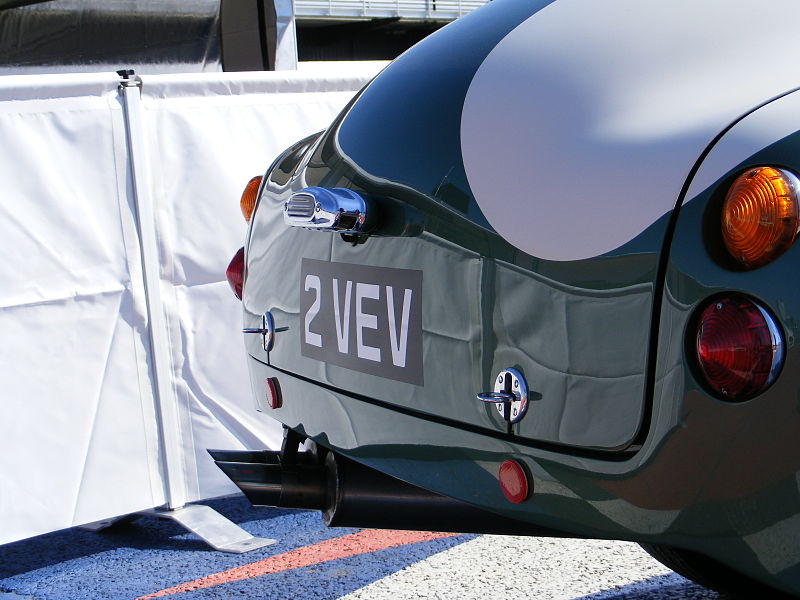
The ex-Ogier Zagato DP209 was restored to its 1962 configuration after a road accident in the 1990s. It was sold for £ 10M as lot 335 by Bonhams on July 13, 2018. Please watch the video prepared by the auction house. The rear view is shared by Hipwell on Wikimedia.
In 1962 Aston Martin feels that it will not be enough for winning. Under the project reference MP209, Zagato goes even further in lightening including major changes in body shape.
One of the two 1961 Zagato of Team Essex is heavily damaged in May 1962 at Spa. Major repairs are needed and Aston Martin turns this car into the DP209 configuration. It is again crashed in August 1962 in Gooodwood, this time by the future world champion Jim Clark.
In the high end the victories generate sales. The Aston Martin berlinetta has a lot of issues in competition, including with handling and with tire wear. The collaboration between Aston Martin and Zagato is ended after the 19th car while 25 had been originally planned. Only three cars had received the DP209 configuration. They can be considered as prototypes for the P214 chassis released by Aston Martin in 1963.
The ex-Ogier Zagato DP209 was restored to its 1962 configuration after a road accident in the 1990s. It was sold for £ 10M as lot 335 by Bonhams on July 13, 2018. Please watch the video prepared by the auction house. The rear view is shared by Hipwell on Wikimedia.